The patient was found to have a hiatal hernia and severe gastroesophageal reflux. This meant that stomach contents were flowing back into the esophagus, causing inflammation and pain and putting her at high risk for aspiration pneumonia. As explained by Simon Poloyan, head of the pediatric surgery center, this condition is particularly dangerous in children with cerebral palsy.
“In a child with cerebral palsy or neurological problems, the severity of reflux is very pronounced. The food bolus and gastric juices can be forced up into the oropharynx and, in the process, aspirated—that is, inhaled into the trachea. This causes severe cases of aspiration pneumonia. This is a very common problem among children with cerebral palsy,” the doctor noted.
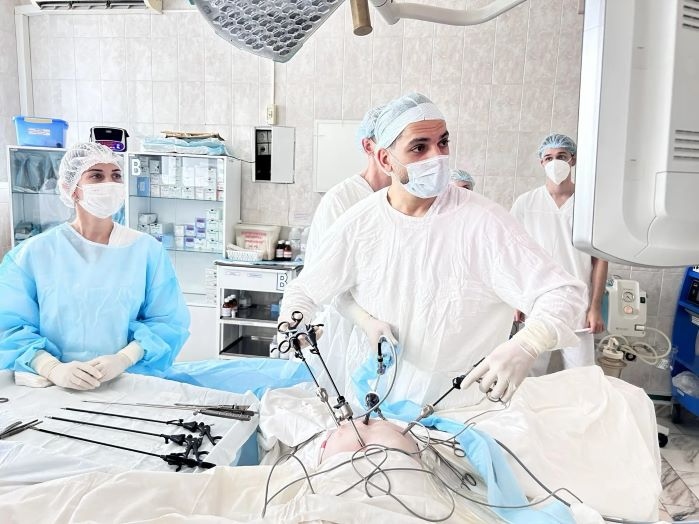
The surgery was performed using a laparoscopic approach—through several small incisions. The surgeons performed a hiatal repair to correct the hernia and then created a special cuff from stomach tissue using the Nissen procedure. It acts as a valve, preventing food and gastric juices from flowing back into the esophagus. According to Simon Poloyan, the procedure required a high degree of precision due to the proximity of major blood vessels and other vital anatomical structures.
The operation was successful, according to the regional Ministry of Health.
Hospital officials said that this was the first laparoscopic surgery of its kind performed at the facility. The new technique will allow for minimally invasive treatment in the most complex clinical cases, shortening patients’ recovery times and reducing the risk of complications.
Source: 24rus.ru