Pasha was born at the same time as his sister Arisha. Both babies were born prematurely, at 28 weeks of pregnancy: their daughter weighed 1,230 grams, and their son weighed 1,270 grams. Arisha came first, and the doctors helped Pasha into the world by turning him over several times. Arisha escaped serious injury, but Pasha faced serious challenges from the very first minutes of his life. He was born with numerous injuries, internal and external hemorrhages in the brain, extensive hematomas on his head and legs, and suffered from oxygen deprivation. The predictions for the girl were promising, but the doctors were extremely cautious about Pasha’s prognosis. At the maternity hospital, they repeatedly suggested that the babies’ mother give up her son, assuring her that he would never be able to sit or walk.
Arisha was recovering quickly, but Pasha’s recovery was slow. He was on a ventilator for fourteen days. Gradually, the bruises began to fade, but cysts started to form in their place, and the child’s head grew larger—this was a sign of hydrocephalus. When he was one and a half months old, he underwent his first surgery—a ventriculoperitoneal shunt. At two months, he underwent retinal cryopexy in both eyes, after which the children were discharged home. By the time he was one and a half years old, the boy was diagnosed with “cerebral palsy.”
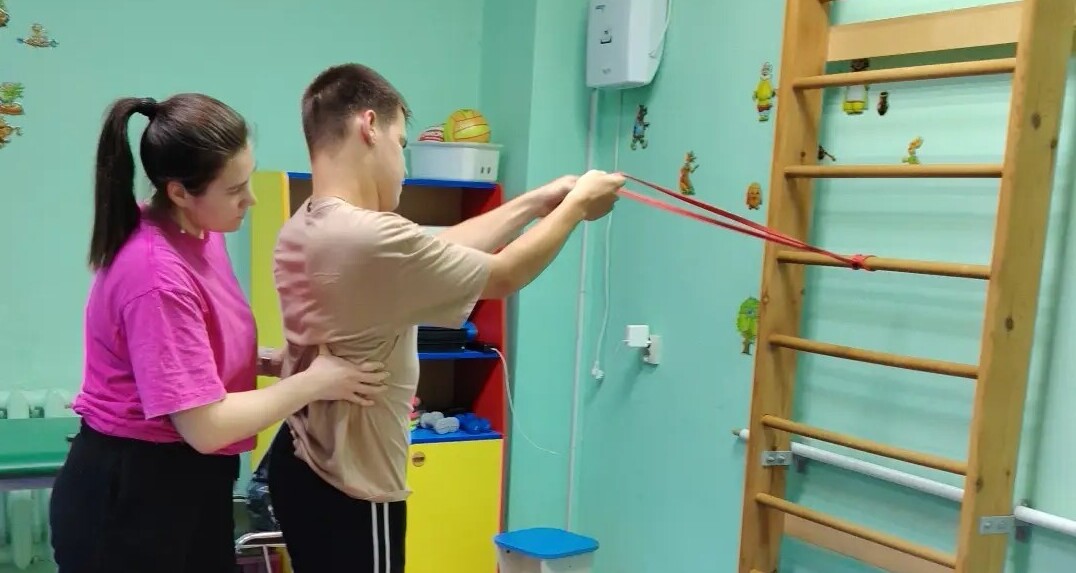
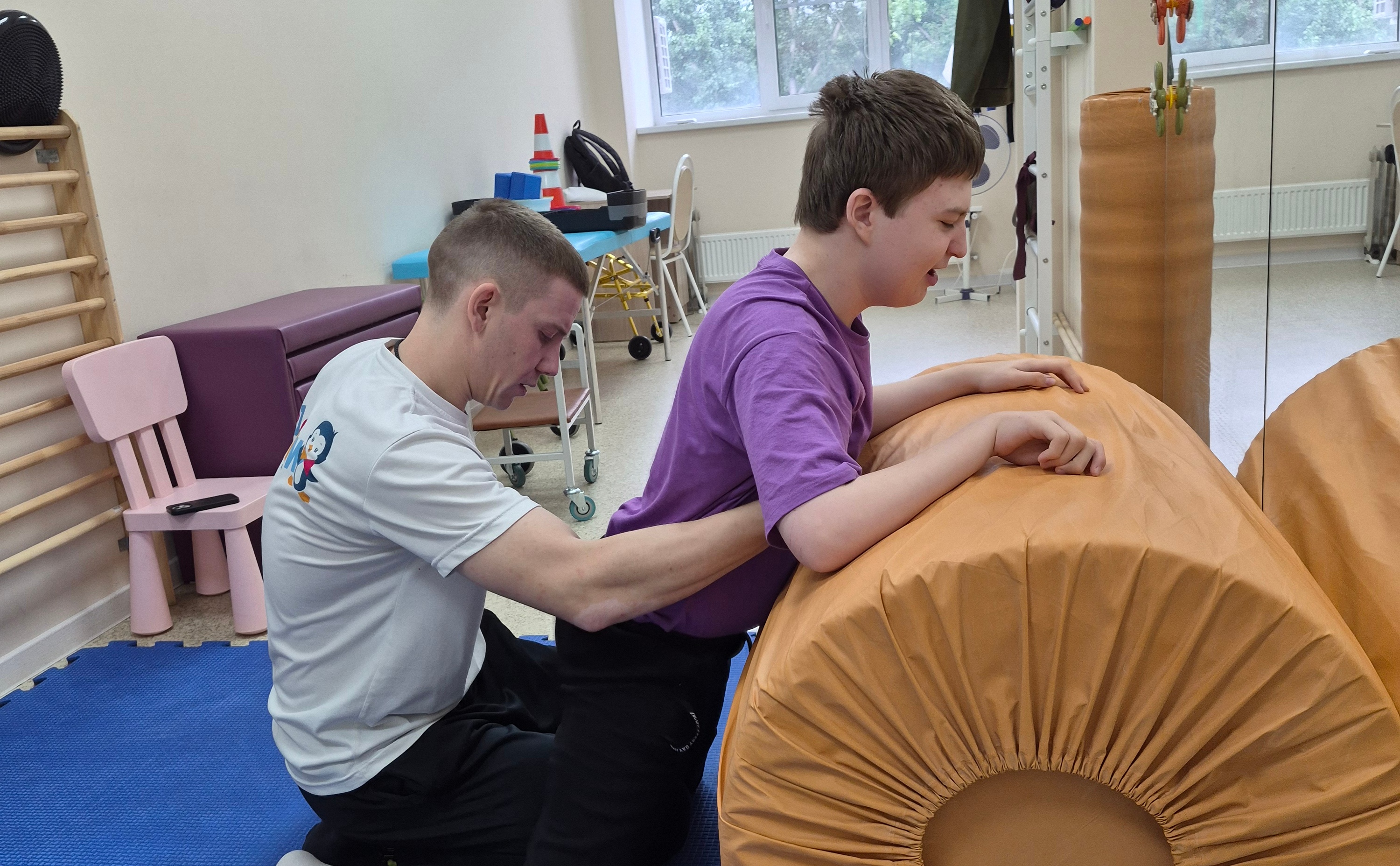
Currently, Pasha does not speak or walk on his own, but he walks confidently while holding someone’s hand and tries to walk by himself. He can sit and stand with support, and knows a few short words. He understands speech directed at him and can express his desires using pictures and photos on a phone. He receives his education at home. Despite his complex diagnosis, he has made significant progress.
Pasha receives huge support from his sister Arina: she reads books to him, plays with toy cars and other games with him, teaches him to draw, and helps him get dressed and put on his shoes.
Timely orthopedic surgeries and regular rehabilitation have significantly improved Pasha’s condition, and now it is especially important not to lose the progress he has made. Sudden growth spurts and the challenges of adolescence introduce their own complications, so treatment must continue: gradually increasing the intensity of exercises and, under no circumstances, missing comprehensive rehabilitation sessions.
On behalf of the Foundation, we would like to thank all the caring people who have made it possible for us to help Pasha on his difficult journey to recovery.
You can help children with cerebral palsy on our website. Let’s do good together! fundbs.com/help-us/