
The World Health Organization published this statistic in 2020: for every thousand healthy children, there are three to four children diagnosed with Cerebral palsy. Most of these children are rehabilitated and educated almost like normal children - but more often in special programs.
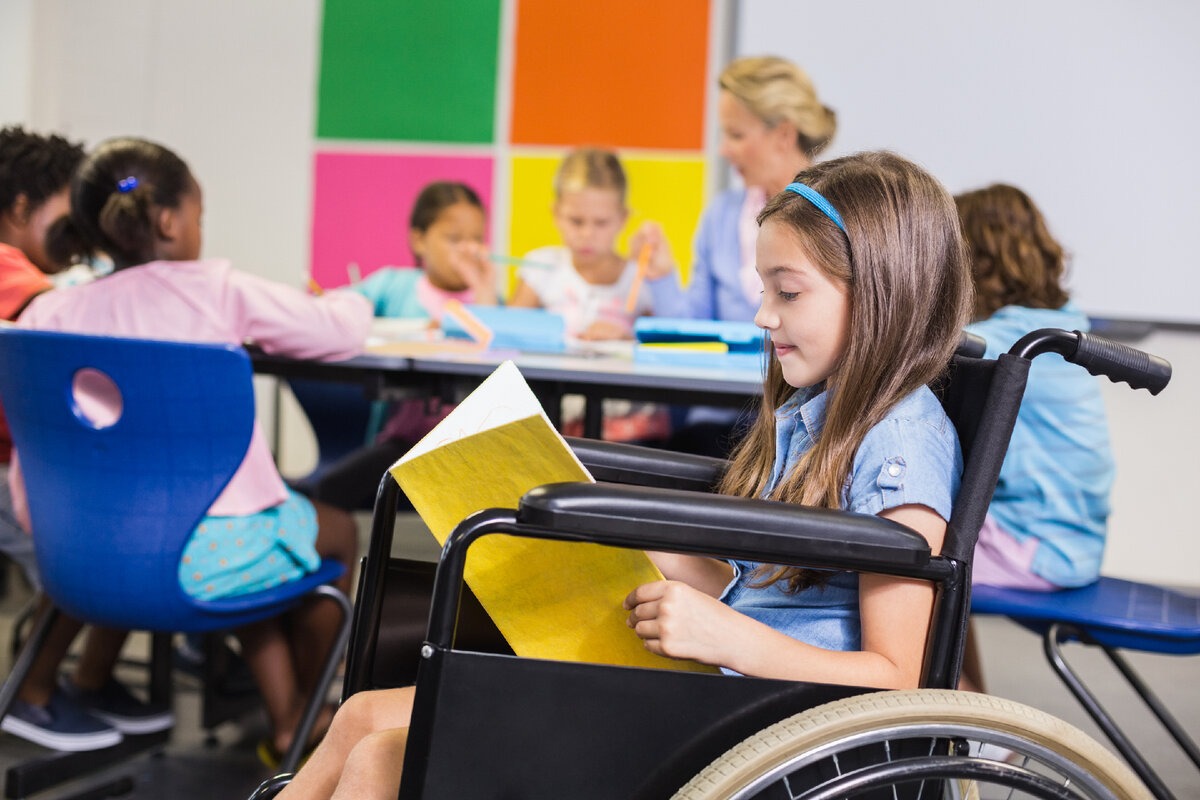
At some schools there is an inclusive form of education, which allows all children, regardless of their features, to study together. Nowadays not every regular school has such opportunities, but in the last fifteen years there are more of them than at the beginning of the noughties. Let's talk about what adaptive educational technologies are used in schools and how a child with cerebral palsy is enrolled in a classroom.
Cerebral palsy is included in a category called disabilities. There are different programs and forms of education in schools, depending on what kind of disability the child has.
Regulatory and educational bases for children with disabilities are updated every year. New features are considered, which are identified in the process of education, and based on these data adaptive educational programs and technologies are developed or adjusted.
In order to determine the most appropriate educational program for a child, he or she is assigned to a PMPC - a Psychological- medical- and pedagogical commissions. It includes several specialists: pediatrician, speech therapist, speech pathologist, speech pathologist, psychiatrist, psychologist, teacher and social pedagogue. They first collect information about the child and then set a date for the parents to come to the commission.
How the commission is held: all the experts are in the same room with the parents and the child. Parents watch what is going on, and the members of the commission evaluate a child in "real time": they perform tests, ask questions, perform logical tasks and analyze the child's state of health. Usually, this event does not last more than two hours, otherwise the child may get tired from continuous examination.
If specialists realize that a child does have specific impairments that can be defined as disabilities, they issue a conclusion report to the parents: it specifies how a child is recommended to be educated and which program is best adapted to his or her characteristics. It is important that they do not decide how and where the child should study - they make recommendations, but only parents can decide.
If the disorders are serious and the specialists determine that the child is unlikely to be able to study in a regular school, they recommend other options: home schooling or a specialized boarding school.
A parent can take the psycho-medical-pedagogical commission report to the school: Based on this document, school staff must provide the child with the learning conditions recommended by the specialists of the psychological-medical-and pedagogical commissions. The pre-submission conclusion is valid for one year from the date of signing. It means that if the conclusion report was signed on May 30, 2023, and a parent brought the document to the school only in summer 2024, it will be invalid. But if a parent brings the conclusion to school in the summer of 2023, it will be valid for the whole level of education - for the whole elementary, middle or high school. It will not be necessary to pass the psychological-medical-and pedagogical commissions every year, - only if on special indications.
A referral to a psychological-medical-and pedagogical commissions can be given, for example, in a hospital, but it does not in itself oblige you to undergo a commission. If the parents feel that it is not necessary, the referral can be avoided, but it is important to understand the responsibility of this decision.
Adaptive technologies in schools
Interactive learning. Teachers use a conversational or dialogical approach to learning. In this way, all students communicate not only with the teacher, but with each other as well: besides learning information, they learn to discuss, express their opinions, listen to different points of view, solve common problems together, and be more tolerant of each other. This approach rarely involves individual work: most often, a teacher organizes group work and tasks the children to complete projects or prepare a presentation together and deliver it to the class.
Modular learning. Children learn information through modules: specially organized blocks, which may contain not just one discipline, but several disciplines: for example, literature and Russian language. This combination helps the teacher to immerse the students deeper into the topic and to use different teaching methods. Modules assume that students try to study the topic themselves, while the teacher supervises, guides and encourages them to communicate constantly. Due to the more active position of the student, a teacher is able to monitor the quality of knowledge more closely and see where and in which areas a child is good and in which areas he/she is failing.
Home schooling. If a child with Cerebral palsy has preserved intelligence but cannot attend school due to motor impairments, then teachers come to teach him at home. They use a regular educational program, but with adaptations to the student's abilities. For example, if a child's hands work poorly, he/she does not write essays, but discusses the topic with a teacher.
In addition, children with Cerebral palsy are provided with adaptive physical training and the obligation to continue rehabilitation sessions with specialists: speech therapist, speech pathologist, psychologist and others.
If a child has a preserved intellect, and he/she studied according to the regular school program, but with the help of adaptive technologies, he/she will receive the same certificate as everyone else. It won't say that he or she received education under an adaptive program, because in fact he or she has still learned the same amount of information that is stipulated by the Federal State Educational Standards.
It is necessary to consult a medical specialist.
At some schools there is an inclusive form of education, which allows all children, regardless of their features, to study together. Nowadays not every regular school has such opportunities, but in the last fifteen years there are more of them than at the beginning of the noughties. Let's talk about what adaptive educational technologies are used in schools and how a child with cerebral palsy is enrolled in a classroom.
Cerebral palsy is included in a category called disabilities. There are different programs and forms of education in schools, depending on what kind of disability the child has.
Regulatory and educational bases for children with disabilities are updated every year. New features are considered, which are identified in the process of education, and based on these data adaptive educational programs and technologies are developed or adjusted.
In order to determine the most appropriate educational program for a child, he or she is assigned to a PMPC - a Psychological- medical- and pedagogical commissions. It includes several specialists: pediatrician, speech therapist, speech pathologist, speech pathologist, psychiatrist, psychologist, teacher and social pedagogue. They first collect information about the child and then set a date for the parents to come to the commission.
How the commission is held: all the experts are in the same room with the parents and the child. Parents watch what is going on, and the members of the commission evaluate a child in "real time": they perform tests, ask questions, perform logical tasks and analyze the child's state of health. Usually, this event does not last more than two hours, otherwise the child may get tired from continuous examination.
If specialists realize that a child does have specific impairments that can be defined as disabilities, they issue a conclusion report to the parents: it specifies how a child is recommended to be educated and which program is best adapted to his or her characteristics. It is important that they do not decide how and where the child should study - they make recommendations, but only parents can decide.
If the disorders are serious and the specialists determine that the child is unlikely to be able to study in a regular school, they recommend other options: home schooling or a specialized boarding school.
A parent can take the psycho-medical-pedagogical commission report to the school: Based on this document, school staff must provide the child with the learning conditions recommended by the specialists of the psychological-medical-and pedagogical commissions. The pre-submission conclusion is valid for one year from the date of signing. It means that if the conclusion report was signed on May 30, 2023, and a parent brought the document to the school only in summer 2024, it will be invalid. But if a parent brings the conclusion to school in the summer of 2023, it will be valid for the whole level of education - for the whole elementary, middle or high school. It will not be necessary to pass the psychological-medical-and pedagogical commissions every year, - only if on special indications.
A referral to a psychological-medical-and pedagogical commissions can be given, for example, in a hospital, but it does not in itself oblige you to undergo a commission. If the parents feel that it is not necessary, the referral can be avoided, but it is important to understand the responsibility of this decision.
Adaptive technologies in schools
Interactive learning. Teachers use a conversational or dialogical approach to learning. In this way, all students communicate not only with the teacher, but with each other as well: besides learning information, they learn to discuss, express their opinions, listen to different points of view, solve common problems together, and be more tolerant of each other. This approach rarely involves individual work: most often, a teacher organizes group work and tasks the children to complete projects or prepare a presentation together and deliver it to the class.
Modular learning. Children learn information through modules: specially organized blocks, which may contain not just one discipline, but several disciplines: for example, literature and Russian language. This combination helps the teacher to immerse the students deeper into the topic and to use different teaching methods. Modules assume that students try to study the topic themselves, while the teacher supervises, guides and encourages them to communicate constantly. Due to the more active position of the student, a teacher is able to monitor the quality of knowledge more closely and see where and in which areas a child is good and in which areas he/she is failing.
Home schooling. If a child with Cerebral palsy has preserved intelligence but cannot attend school due to motor impairments, then teachers come to teach him at home. They use a regular educational program, but with adaptations to the student's abilities. For example, if a child's hands work poorly, he/she does not write essays, but discusses the topic with a teacher.
In addition, children with Cerebral palsy are provided with adaptive physical training and the obligation to continue rehabilitation sessions with specialists: speech therapist, speech pathologist, psychologist and others.
If a child has a preserved intellect, and he/she studied according to the regular school program, but with the help of adaptive technologies, he/she will receive the same certificate as everyone else. It won't say that he or she received education under an adaptive program, because in fact he or she has still learned the same amount of information that is stipulated by the Federal State Educational Standards.
It is necessary to consult a medical specialist.


