
Pavel's story
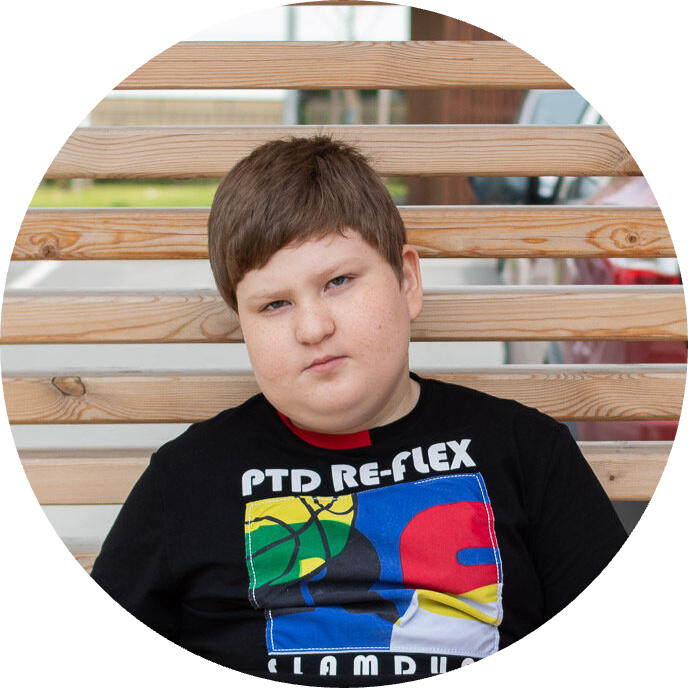
Pasha was born at the same time as his sister, Arisha. The babies were born prematurely at the 28th week of pregnancy: the daughter weighed 1,230 grams, and the son weighed 1,270 grams. Arisha was born first, while doctors helped Pasha enter the world by turning the baby several times. Arisha escaped severe injuries, but Pasha faced serious trials within the very first minutes of his life. He was born with numerous injuries, internal and external brain hemorrhages, extensive hematomas on his head and legs, and suffered from oxygen deprivation. The prognosis for the girl was encouraging, whereas doctors were extremely reserved regarding Pasha. At the maternity hospital, the children's mother was repeatedly urged to give up her son, with assurances that he would never be able to sit or walk. Arisha recovered quickly, while Pasha's recovery was slow. He spent fourteen days on mechanical ventilation. Gradually, the hematomas began to resolve, but cysts started forming in their place, and the child's head began to enlarge—this was how hydrocephalus manifested. At one and a half months old, the boy underwent his first surgery: ventriculoperitoneal shunting. At two months old, he underwent cryopexy of the retina in both eyes, after which the children were discharged home. By the age of one and a half, the boy was diagnosed with cerebral palsy.
Currently, Pasha does not speak or walk independently, but he walks confidently by the hand and makes attempts to walk on his own. He knows how to sit, stand while holding onto support, and knows a few short words. The boy understands speech directed at him and can explain his desires using pictures and photos on a phone. Education takes place at home. Despite the complex array of diagnoses, he has achieved noticeable success. Arina provides tremendous support to Pasha: she reads books to him, plays with toy cars and other games, teaches him how to draw, and helps him get dressed and put on shoes. Timely orthopedic surgeries and regular rehabilitations have significantly improved Pasha's condition, and it is now especially important not to lose the results achieved. Growth spurts and the specifics of adolescence introduce their own challenges, so treatment must continue: increasing the workload and under no circumstances missing comprehensive rehabilitation courses. Comprehensive treatment is critically important for Pasha: the tailored set of procedures will help solidify already acquired skills and open up new opportunities for development. Unfortunately, the family cannot afford to pay for the rehabilitation on their own.
